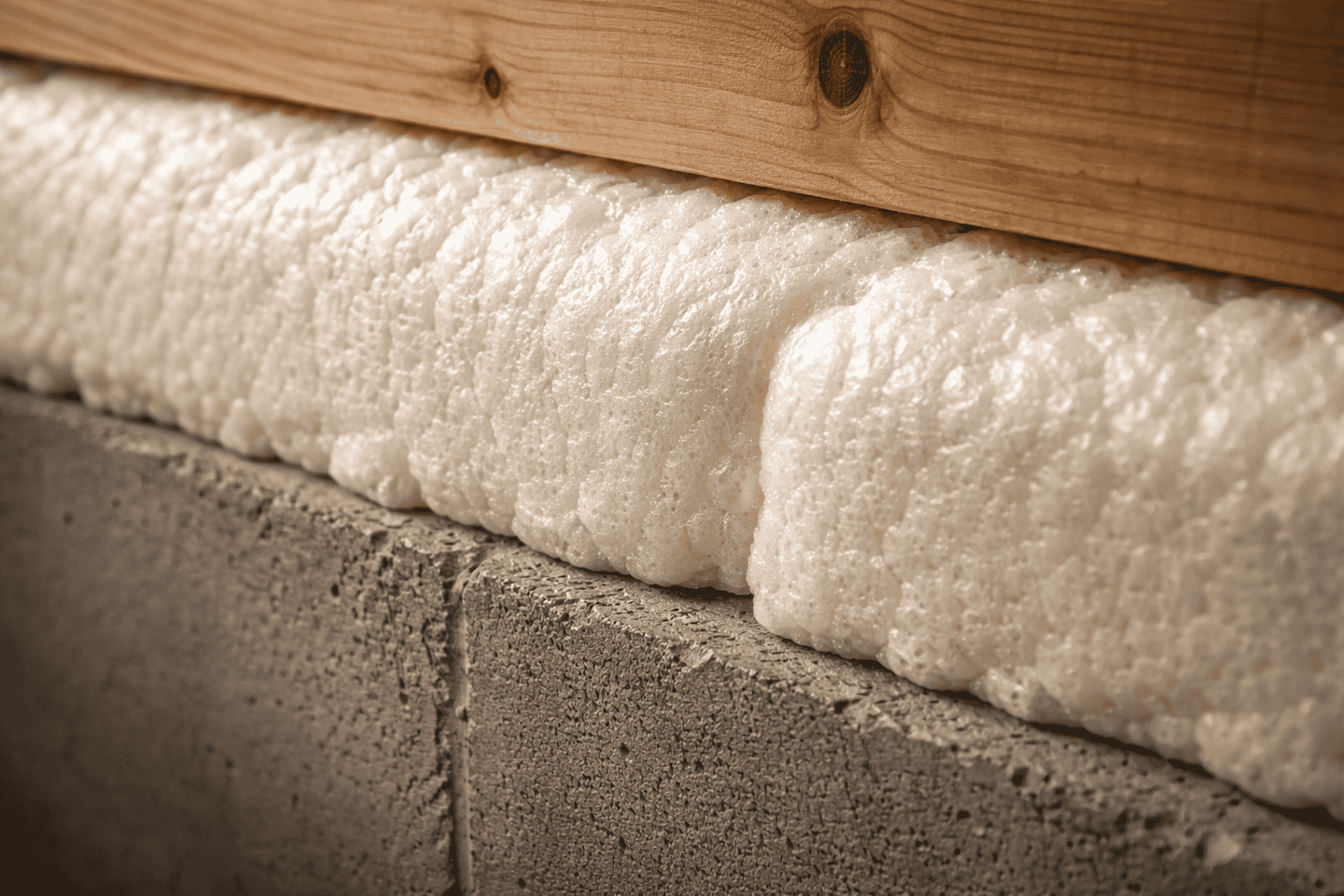
Closed cell spray foam insulation Anna TX delivers the highest R-value per inch of any insulation product available for residential and commercial properties. If you want the most moisture-resistant, structurally reinforcing, highest R-value spray foam insulation available, closed-cell is it. We install closed-cell spray foam insulation throughout Anna and all of North Collin County for homeowners and builders who want the best long-term performance from their insulation system.
Closed-cell spray foam has an R-value of 6–7 per inch — nearly double that of open-cell foam. It creates a rigid, dense barrier that repels moisture, resists air infiltration, and adds measurable structural strength to walls and roof decks. In North Texas’s climate of extreme summer heat, high humidity, and occasional winter freezes, closed cell foam addresses every major insulation challenge in a single application.
What Makes Closed-Cell Different
Higher R-Value Per Inch
Closed-cell foam delivers R-6 to R-7 per inch of thickness. That means a 2-inch application achieves R-12 to R-14 — equivalent to what open-cell foam achieves at 4–5 inches. In tight spaces like cathedral ceilings, low-slope roofs, and shallow wall cavities, closed-cell is often the only product that can hit the required R-value within the available depth.
Moisture and Vapor Barrier
Closed-cell foam is impermeable to water and acts as a Class II vapor retarder. This makes it the right choice for crawl spaces, basement walls, exterior walls in high-humidity areas, and any application where moisture infiltration is a concern. Open-cell foam absorbs moisture — closed-cell repels it.
Structural Reinforcement
Once cured, closed cell foam is rigid and dense. Applied to wall cavities and roof decks, it measurably increases the racking strength of the structure. This is particularly valuable in new construction where builders want to maximize both energy performance and structural integrity in a single product.
Where We Install Closed-Cell Foam in Anna Homes
Crawl Spaces
Closed-cell is the definitive choice for crawl space walls and floors. Its moisture impermeability stops ground vapor from entering the home, eliminates the cold floor problem common in North Texas winters, and prevents the mold growth that unencapsulated crawl spaces frequently develop.
Exterior Walls
Applied to exterior wall cavities during new construction, closed-cell foam creates an airtight, moisture-resistant envelope around the entire home. Combined with its structural reinforcement properties, it produces a building envelope that significantly outperforms code-minimum fiberglass construction.
Low-Slope and Flat Roofs
Low-slope roofs are particularly vulnerable to moisture infiltration. Closed-cell foam applied to the underside of a low-slope roof deck creates a waterproof barrier that open-cell foam cannot provide. For homes with flat or low-slope roof sections, closed cell is the only appropriate choice.
Rim Joists and Band Joists
One of the most cost-effective applications of closed-cell foam is sealing rim joists — the perimeter framing at the top of your foundation. These areas are notorious air leakage points in older homes. A 2-inch application of closed-cell foam at the rim joist dramatically reduces drafts and energy loss at a relatively low cost.
Metal Buildings and Shops
For metal structures, closed-cell foam solves both the condensation problem and the thermal performance problem simultaneously. It adheres directly to metal panels, creates an airtight seal, and provides real R-value — something faced fiberglass batts installed in metal buildings cannot reliably deliver.
Closed-Cell vs. Open-Cell — Which Is Right for You?
Both products are excellent. The right choice depends on your application, your budget, and your specific performance goals.
Choose closed-cell if: you need maximum R-value in a limited space, your application involves moisture exposure, you are insulating a crawl space or basement wall, you have a low-slope or flat roof section, or you want the structural reinforcement benefit.
Choose open-cell if: you are insulating a standard attic roof deck, your budget is the primary consideration, you want excellent air sealing at a lower price point, or you are insulating interior walls primarily for sound reduction.
We explain the tradeoff honestly during every estimate visit. Most Anna homeowners end up using closed-cell for crawl spaces and specific problem areas, and open-cell for the attic — getting the benefits of both products where each performs best.
Pricing for Closed-Cell Spray Foam in Anna, TX
Closed-cell spray foam costs more than open-cell because it uses more material and requires more precise application. Here are typical ranges for common applications in the Anna area:
Crawl space walls and floor: $2,500–$5,000 depending on size and access
Exterior wall cavities — new construction: $1.50–$2.50 per sq ft of wall area
Attic roof deck — closed cell: $3.00–$4.50 per sq ft installed
Rim joist sealing: $800–$2,000 depending on linear footage
Metal building or shop: $1.50–$3.50 per sq ft depending on size
All quotes are written and itemized. We provide exact pricing after an on-site assessment — we do not quote closed-cell jobs over the phone because the variables are too significant to give an accurate number without seeing the space.
Frequently Asked Questions
Is closed-cell spray foam worth the extra cost over open-cell?
For the right applications — crawl spaces, moisture-prone areas, low-slope roofs, and exterior walls — yes, absolutely. The moisture impermeability and higher R-value per inch justify the price premium in these situations. For a standard vented attic conversion, open-cell typically delivers equivalent air-sealing performance at a lower cost. We tell you honestly which product makes sense for your specific project.
How thick does closed cell foam need to be?
It depends on the required R-value for your application and local building code. In North Texas, exterior walls typically require R-13 minimum — achievable with approximately 2 inches of closed cell foam. Attic roof decks typically require R-30 or higher, which would require 4–5 inches of closed cell. We calculate the correct thickness for your specific project during the estimate visit.
Can closed cell foam be installed in an existing home?
Yes — though retrofit installation is more involved than new construction. For attics and crawl spaces, access is straightforward. For exterior walls, we use drill-and-fill injection methods that don’t require removing drywall in most cases. We assess your specific situation and explain the approach during the free estimate.
How long does closed cell spray foam last?
Properly installed closed cell spray foam is essentially permanent. It does not sag, settle, absorb moisture, or degrade under normal conditions. Most manufacturers offer lifetime warranties on the product itself. The installation workmanship warranty varies by contractor — ask about this during your estimate visit.
Get a Free Closed-Cell Spray Foam Estimate
We serve Anna, Melissa, Van Alstyne, Sherman, Gunter, Howe, Weston, Celina, and all of North Collin County. Free on-site assessment, written quote within 48 hours.
Call us now: (972) 645-2933