
📞 Call (972) 645-2933 — Free Estimate
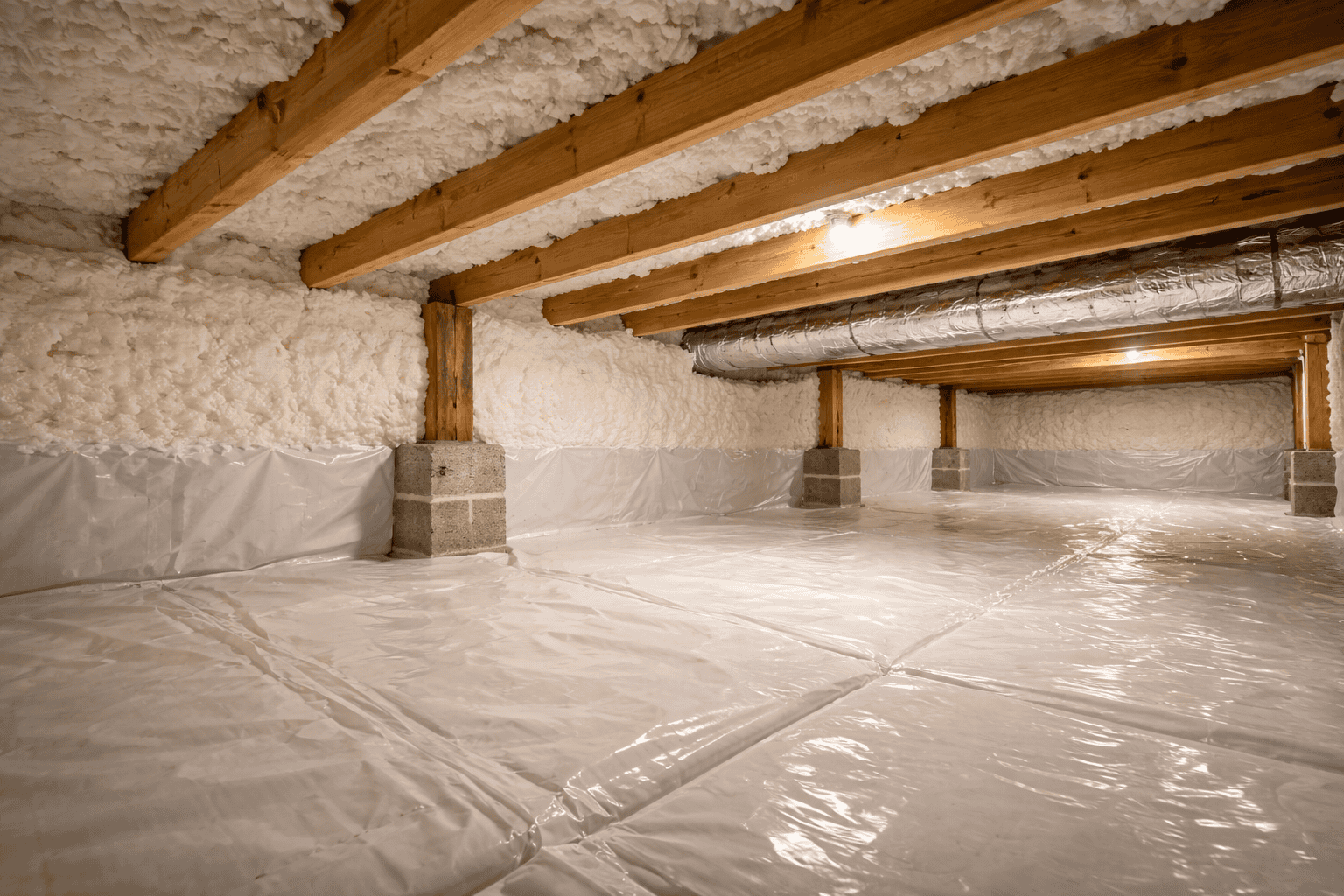
Crawl space encapsulation Anna TX homeowners trust from NTX Foam Pros eliminates the moisture, mold risk, and energy loss that open crawl spaces cause in North Texas homes. Anna’s clay-heavy soils retain moisture year round, and that moisture migrates upward through an open crawl space into the living area above — driving up humidity, accelerating wood rot, and creating the conditions mold needs to establish itself.
Why Crawl Space Encapsulation Matters in North Texas
North Texas crawl spaces face a specific combination of challenges — expansive clay soils that hold groundwater long after rain events, warm humid summers that drive moisture vapour into cool crawl spaces, and temperature swings that cause condensation on cold surfaces during winter. An open or poorly sealed crawl space in Anna exposes floor joists, subfloor, and insulation to these conditions continuously.
Crawl space encapsulation addresses all of these problems by sealing the crawl space completely from ground moisture and exterior air. According to the EPA, moisture control is the single most important factor in preventing mold growth — and crawl space encapsulation is the most effective moisture control measure available for homes with crawl space foundations.
What Crawl Space Encapsulation Includes
A complete crawl space encapsulation from NTX Foam Pros includes a heavy-duty vapour barrier installed across the entire crawl space floor and up the foundation walls, sealed at all seams, penetrations, and transitions. Where spray foam is specified for the foundation walls or rim joists, we apply it as part of the same installation. All vents are sealed, and we inspect and address any existing moisture damage, mold, or insulation issues identified during the process.
Crawl Space Encapsulation vs Vented Crawl Spaces
Traditional building practice called for vented crawl spaces — the theory being that airflow would dry out moisture. In North Texas, vented crawl spaces often do the opposite — they draw in humid outside air during summer, which condenses on cool surfaces inside the crawl space and creates chronic moisture problems. Encapsulated crawl spaces consistently outperform vented crawl spaces in hot-humid climates for moisture control, energy efficiency, and long-term durability.
Our Crawl Space Encapsulation Process
Every crawl space encapsulation project starts with a free inspection. We go into the crawl space, assess moisture levels, existing vapour barrier condition if any, insulation status, wood condition, and any signs of mold or pest activity. We give you a written quote before any work is scheduled. Installation is completed in a single visit for most Anna area homes.
Serving Anna TX and Surrounding Communities
NTX Foam Pros provides crawl space encapsulation throughout Anna, McKinney, Celina, Melissa, Van Alstyne, Weston, Gunter, Howe, and Sherman. Call (972) 645-2933 for a free crawl space inspection.
Frequently Asked Questions
How much does crawl space encapsulation cost in Anna TX?
Crawl space encapsulation costs vary based on crawl space size, access conditions, and the scope of work required. Most residential projects in the Anna area run between $2,000 and $6,000. We provide written quotes after the free inspection.
Does crawl space encapsulation prevent mold?
Crawl space encapsulation eliminates the moisture conditions that mold requires to grow. It does not remediate existing mold — if active mold is present, remediation is required before encapsulation. We identify existing mold during the inspection and advise on the correct sequence of work.
How long does crawl space encapsulation last?
A properly installed crawl space encapsulation with a quality vapour barrier typically lasts 20 years or more. We use heavy-duty reinforced barriers rated for long-term performance and install them to manufacturer specifications.